search archives  
powered by FreeFind


Hands-On-Health

by Marilu Henner

It seems we are overwhelmed these days with information on health and fitness.  It is perhaps the most popular topic in our media today (after Brangelina, of course!)  In some ways we have reached the point where we no longer listen, because everything sounds like something we’ve heard before.  Most of us already agree on the basics: eat plenty of fruits and vegetables and whole grains; limit animal products, sugar, saturated fats, caffeine, and alcohol and blah, blah, blah….  This spiel has become more familiar to us than a Hail Mary!  We could recite it before every meal and call it An Act of Restriction.

But what’s interesting is that, although most of us agree on these basics, very few of us actually follow them.  The typical American pattern is to forget this advice as soon as the dinner bell rings so that we can guiltlessly enjoy our favorite comfort foods like burgers, fries, and pizza.  And when trouble arises (as it usually does) like hypertension, high cholesterol, or angina, we simply take a statin, diuretic, or beta-blocker to fix it.  After diagnosing and prescribing, most doctors still allow their patients to indulge …but only in moderation – which to most people means, “Okay, skip the bacon on my cheeseburger!”

People REFUSE to give up their comfort food…even though it is literally killing them!  Add this to the fact that many diet and fitness authors now treat their readers like overindulged children who can’t be told, “NO!”.  People no longer want to hear about restrictions!  I actually read the following in a very popular publication:

Here are some suggestions for incorporating fruits and vegetables into your family’s menus:

  • Add fresh berries to pancake and waffle mixes.

  • Combine chocolate or vanilla pudding with bits of real fruit and freeze them in ice-pop molds.

  • Dip fresh apple slices into melted caramel or chocolate, peanut butter or low-fat whipped topping.

  • Serve artichoke or spinach dip with baked tortilla chips.

  • Add chopped mushrooms and onions to your turkey burgers.

Wow!  What a sacrifice!  I guess some people sneak fruits and vegetables into their recipes as if it’s rat poisoning.  I know this may sound extreme, but can’t we just learn to appreciate the wonderful flavors and subtleties of a juicy pear, a ripe strawberry, or a perfectly steamed stalk of broccoli?  I’m sorry I’m being a bit sarcastic here, but I think it’s time we all took responsibility for our health and wellness.  It’s too important not to.  We will never reverse our current health crisis trend (soaring rates of obesity, cancer, diabetes, and cardiovascular disease) if we don’t. 

It’s time to take charge of our own health destiny!  Forget about trusting a surgeon or prescription drug to keep you or your family healthy.  I firmly believe in the power of food as preventative medicine; it’s the most powerful component of your own HANDS-ON-HEALTH!

My 44-year-old cousin called me recently for advice.  He had failed a health assessment test at his local community college because of a very high blood pressure reading of 163/102.  The school told him that if he didn’t get his blood pressure below 140/90 by the following week, he would be required to get a doctor’s note to join and use their fitness center.  He’s not a smoker, but he drinks alcohol moderately, and he loves his coffee.  I told him that he should probably see a doctor anyway, but I also told him to try the following healthy regimen as a quick fix before returning to be retested:

  1. Cut out all animal products.

  2. Do at least 30 min. of moderate aerobic exercise everyday

  3. No alcohol

  4. Reduce caffeine by 50% (from 3 cups to one and a half)

  5. Eat lots of fruits and vegetables and salads (a little olive oil and balsamic vinegar is okay)

  6. Make brown rice and whole wheat pasta his staple

  7. Replace his breakfast muffins with unprocessed oatmeal and light sprinkles of maple sugar.

I know my cousin followed this religiously because that’s the kind of guy he is.  He does everything in the extreme.  Well, five days later he proudly announced that his blood pressure went from 163/102 to 123/83 on my program!  He did this in just FIVE DAYS!  This was exciting news for him, but it is also a good example of how quickly diet and exercise can change a person’s body chemistry.  This is not just an isolated example, either.  It’s typical of the healthy results thousands of people on my website www.marilu.com get when they change their diet and start exercising consistently.  (And most of them make only moderate, but effective changes at first.)

The medical and pharmaceutical industries tend to downplay the role of diet and exercise as a remedy for hypertension, high cholesterol, and other diseases like cancer and diabetes.  It’s understandable.  I mean, why would those industries promote something that essentially competes with them?  Keep in mind, also, that nutrition classes are not a requirement in the curriculum for most medical students.  Most of them graduate with less than nine hours spent in a diet or nutrition class.  And I don’t mean nine “credit” hours; I’m talking about nine hours period!  That’s about the same time you’d spend in comedy traffic school for just one speeding ticket!  (One day in comedy traffic school, however, seems to last as long as medical school.) 

Because of this deficiency in the med school curriculum, there tends to be an arrogance and/or bias against the significance of diet for combating disease.  Only the hippest, best-informed physicians aggressively promote diet and exercise for the prevention of disease.  If you’re lucky enough to find one of these doctors, stick with ‘em!  They’ve got your best interests in mind.  Unfortunately, most doctors are quick to prescribe drugs instead of turning to them only after trying diet and exercise first.  Sometimes medication is, of course, the way to go, but only in addition to (not instead of) diet and exercise.  And that should be only after concluding that diet and exercise are just not enough.

Most patients are all too happy to take meds and continue eating bad food, because this is what they want to believe.  It takes discipline to change your palate and to learn to love the food that loves you.  It’s so much easier to take a pill or two everyday, and eat whatever you want.  Doctors also are reluctant to believe that diet plays the biggest role in disease prevention, because that minimizes their own importance.  If we feel good and have little or no need for prescription drugs, then we don’t really need doctors, either – or at least not that often.  The old apple-a-day cliché is still very true along with its companion – an ounce of prevention…

In addition to trying some of the suggestions I gave my cousin listed above, here is the best prescription for your own HANDS-ON-HEALTH:

Keep regular tabs on the big three health indicators: Blood pressure, cholesterol, and your weight/waistline/BMI (collectively).  In order to do this, you need to get a reliable blood pressure monitor, which start as low as $30 for the manual version.  (The upper arm cuff type is usually more reliable than the wrist or finger version).  Blood pressure should be below 125/80, not 140/90 as previously thought.  Experts now agree that this guideline was too lenient.

You will also need to purchase several at-home cholesterol kits/packets (approx. $8 - $15 per test) for frequent testing.  The test is a little challenging at first, and you do have to prick your finger.  These will only test your total cholesterol as opposed to your HDL/LDL ratio, but don’t worry about this too much (especially if you hate math).  Measuring HDL and LDL requires a complicated test, and knowing this ratio is not as significant as once thought, primarily because HDL (good cholesterol) tends to go down, as LDL (bad cholesterol) goes down.  So the ratio tends to stay relatively the same anyway.  Focusing on “total cholesterol” is more important.  It should be below 170, and not 200, as previously thought.  And below 150 is even better!  Heart disease is extremely rare in people whose total cholesterol is below 150 regardless of their HDL/LDL ratio.  Those with total cholesterol between 150 and 200 make up almost 30 percent of people with heart disease.  Those over 200 make up the other 70 percent. 

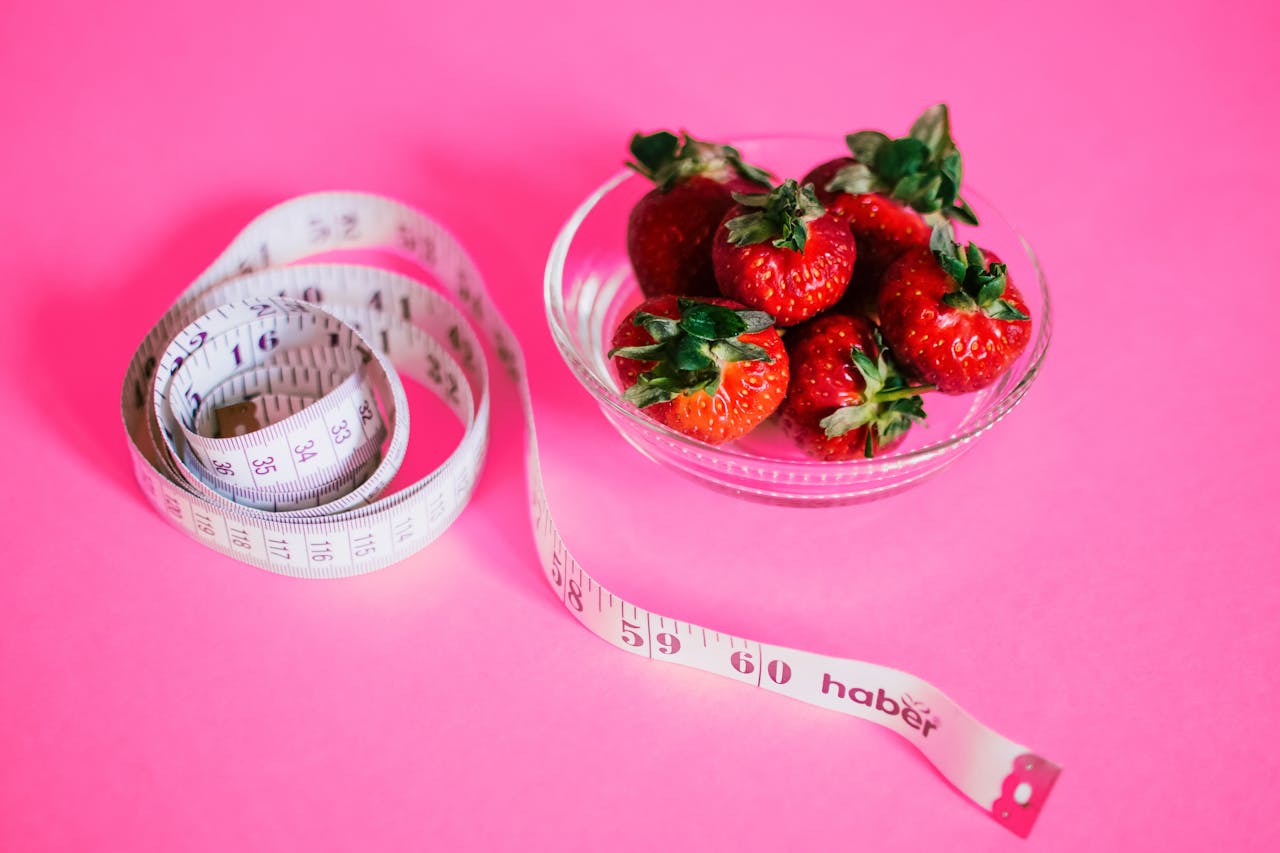
As far as your “weight/waistline/BMI” are concerned, all you need is a good scale and a tape measure.  You can find your BMI (Body Mass Index relating to body fat percentage) at the many BMI calculating sights online.  Plug in your weight, height, and frame size, and it will instantly calculate your BMI, which optimally should be between 19 and 25.

Now, after you have gathered all of the above materials, you should test yourself weekly in all three categories (but only once every 2 or 3 months for cholesterol), and keep good records of your results.  If you are outside the healthiest parameters, you need to adjust your habits accordingly (especially if you are way outside).  Use the exercise and dietary guidelines above that I gave to my cousin as a start, and build/adjust your own rules as you learn more about your body and what feels and works best!

And finally, I want to stress that my HANDS-ON-HEALTH recommendations are not in any way meant to replace regular visits to your physician.  (They don’t make at-home bypass surgery kits yet, anyway!)  A good relationship with your doctor is all part of taking charge of your own health.  Your doctor will probably welcome your initiative and enthusiasm!

Good Luck, and Healthy Times to you and your loved ones!

Marilu


© Healthy Times 2007 | Sitemap